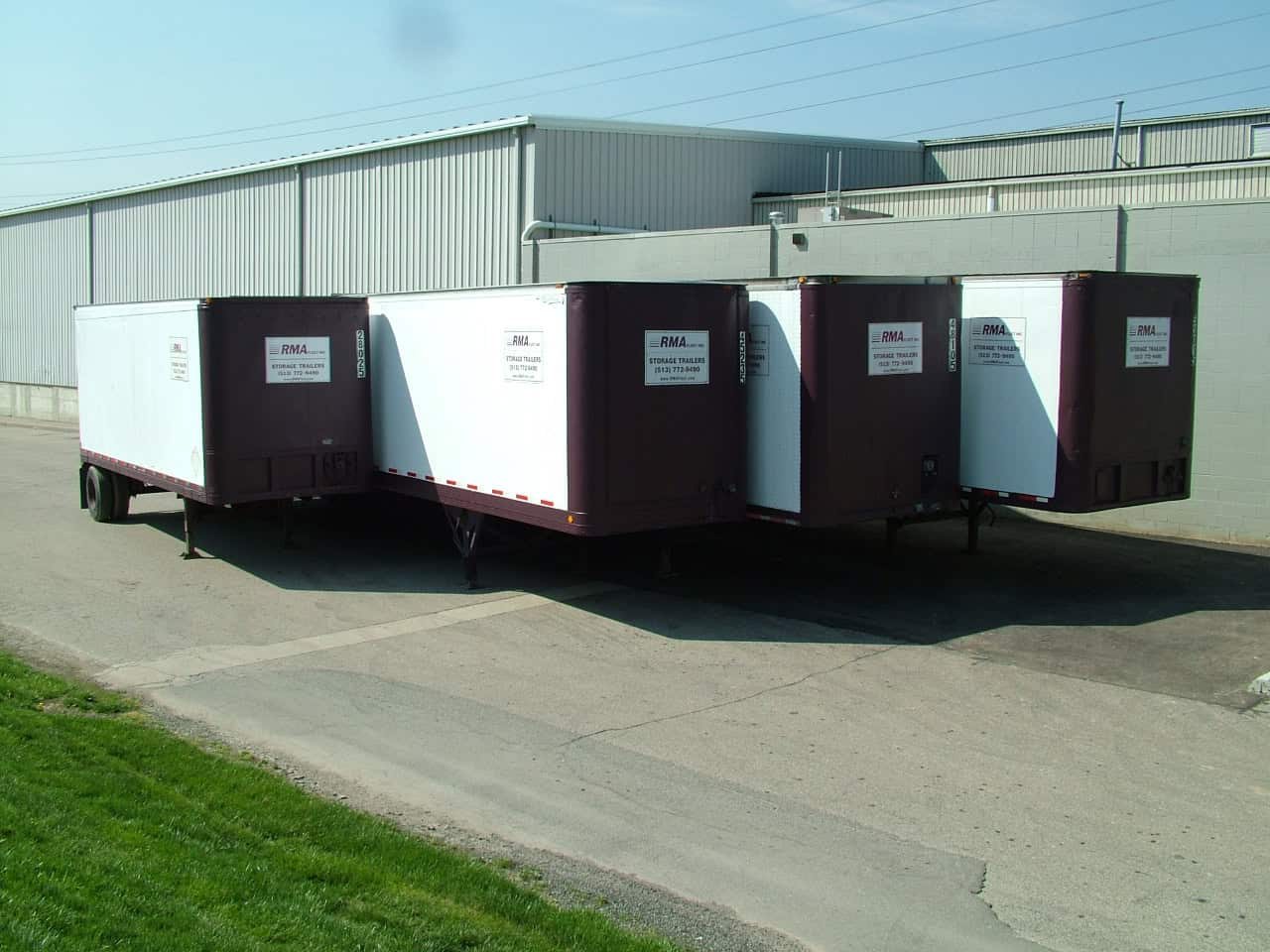
Renting a storage trailer is simple, but picking the wrong size is the one thing that costs people money. Go too small and you are renting a second trailer by month two. Go too big and you are paying for air. Here is how we size it up when a customer calls.
Start with what you are storing, not the square footage
Most people think in square feet. We think in pallets and reach. A standard 40x48 pallet takes up a predictable footprint, and a trailer holds two rows down the length with an aisle if you need to walk in. Tell us roughly how many pallets, or how many rooms of material, and we can call the size in about a minute.
The four sizes, and who each one fits
- 28 foot. Tight overflow, a jobsite tool crib, seasonal decor for a retailer. Around 238 square feet of floor.
- 45 foot. The workhorse. Enough for a small warehouse overflow or a full restaurant remodel without the jump to a 53.
- 48 foot. A step up in capacity when you are staging materials for a longer project.
- 53 foot. Maximum capacity. Manufacturers use these for line-side staging and full production overflow. About 450 square feet.
Do the math before you decide
Cost per square foot is not the same across sizes, and bigger is not always the better deal per foot. We built a quick calculator on our home page so you can slide through all four sizes and see the real monthly cost and cost per square foot side by side. Run your numbers first, then call us.
Sizing plays out differently by market. See how it lands for Mason seasonal retail overflow, and for Lebanon job sites and farm yards.